 Dr Julia Martins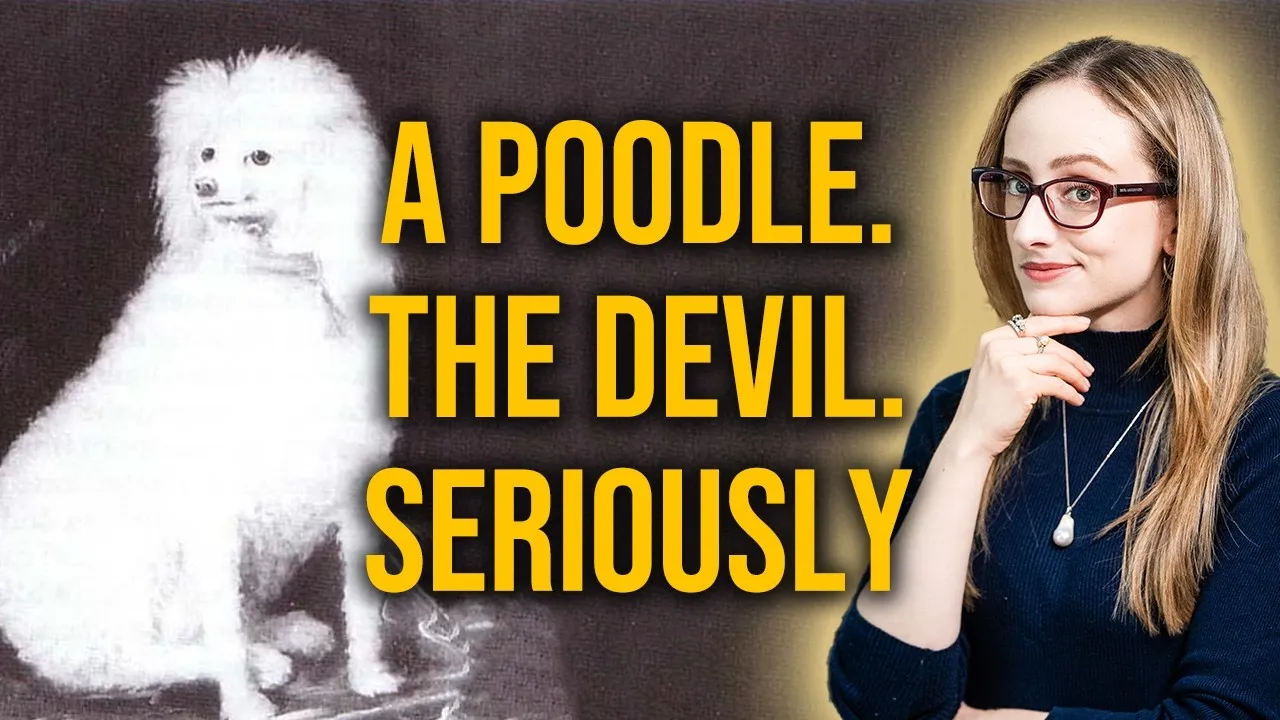
There is a story that gets told about the
It is a great story. It is also, according to historian Mark Stoyle, almost entirely wrong.
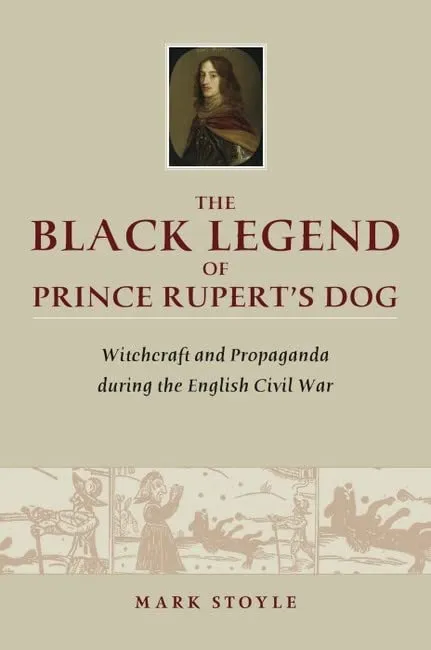
In his book The Black Legend of Prince Rupert’s Dog (2011), Stoyle traces the real origins of this legend, and what he finds turns the whole thing on its head. The witchcraft claims about Boy were not invented by frightened Parliamentarians. They were invented by Royalist propagandists — as a joke. A joke that backfired so spectacularly that it has been misunderstood for nearly four hundred years.
The Prince, the Poodle, and the Pamphlets
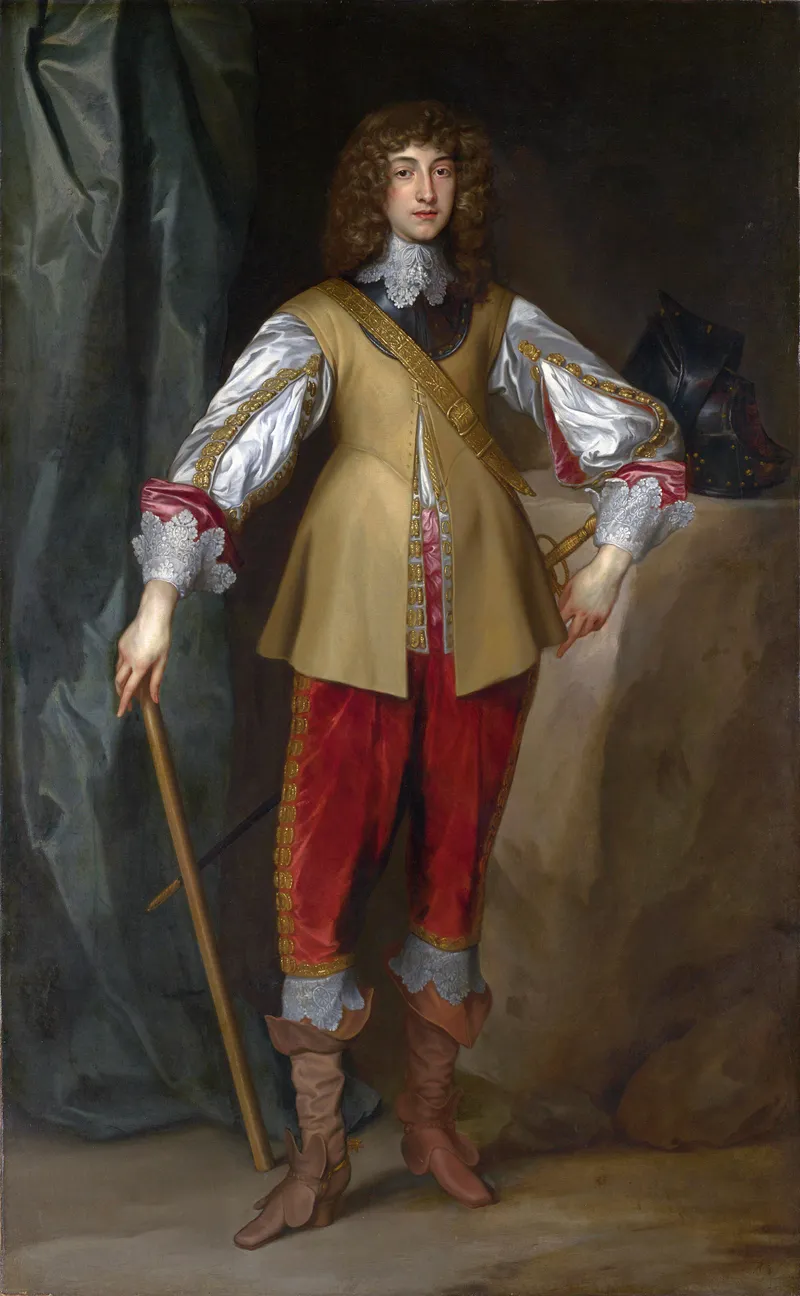
To understand how a poodle became one of the most talked-about figures of the English Civil War, we need to start with its owner. Prince Rupert was born in Prague in 1619, the son of Frederick V, Elector Palatine, and Elizabeth Stuart — which made him the nephew of King Charles I. He had a dramatic early life: captured by Habsburg troops at the age of eighteen, he spent over two years imprisoned at Linz Castle. It was there, around 1639, that the Earl of Arundel sent him a dog as a gift. The dog, a large white hunting poodle, would become his constant companion.
When civil war broke out in England in August 1642, Rupert sailed across the sea to fight for his uncle. He was twenty-two years old, and Charles immediately placed him in command of the Royalist cavalry. Within weeks, Rupert had made a terrifying impression. At the Battle of Edgehill in October 1642, his cavalry charges were devastating. The Parliamentarian press in London began describing him as devilish — young, foreign, reckless, and seemingly unstoppable. And he had this dog.
By November 1642, anonymous pamphleteers in London were already hinting that Rupert possessed supernatural powers, that he was protected by dark forces, that no ordinary man could do what he did. These were serious accusations in a society where belief in witchcraft was widespread and enshrined in law. But the next step — the moment the dog itself became the centre of the story — came not from the Parliamentarian side, but from the Royalist one.
The poet John Cleveland, a committed Cavalier based in Oxford, wrote a satirical poem called ‘To Prince Rupert’ in late 1642. In it, he mocked the Parliamentarians for being so frightened of Rupert that they believed his dog was a devil. It was a joke at the Roundheads’ expense: look how superstitious these people are.
Then, in January or February 1643, a pamphlet appeared that would define the legend for centuries. It was called Observations Upon Prince Rupert’s White Dog, Called Boy, and it was supposed to be a letter from a Parliamentarian spy in Oxford, describing the dog’s supernatural ‘qualities’.
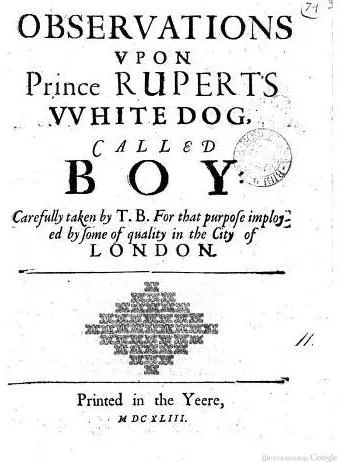
According to this spy, who signed himself only as T.B., Boy could prophesy, speak as many languages as Satan, turn invisible, and change his shape at will — plus he was immune to bullets. T.B. claimed the dog was ‘certainly some Lapland Lady, who by Nature was once a handsome White Woman, and now by Art is become an handsome white Dogge’.
For over a century, most historians assumed this pamphlet was a straightforward piece of Parliamentarian propaganda — evidence that the Roundheads really did believe the dog was demonic. But Stoyle makes a compelling case that the Observations was actually a piece of Royalist ‘black propaganda’, written by someone in Cleveland’s circle. The pamphlet is packed with insider knowledge of events in Oxford, mocks puritan preachers and Parliamentarian politicians by name, and its supposed ‘spy’ uses language that would have had Royalist readers laughing out loud. T.B.’s breathless account of Boy sitting in the king’s chair and attending High Church services is a parody of Parliamentarian credulity, not an expression of it.
The pamphlet was a hit. It spawned a whole series of responses and imitations: A Dialogue, or Rather a Parley betweene Prince Ruperts Dogge … and Tobies Dog, probably written by the Water Poet John Taylor, which staged a comic debate between Boy and a Parliamentarian dog called Pepper; An Exact Description of Prince Rupert’s Malignant She-Monkey, which introduced a fictional pet monkey into the mix; and The Parliaments Unspotted-Bitch, apparently the first genuinely Parliamentarian response, which tried to turn the joke back against the Royalists. By the spring of 1643, images of Boy had been produced for public consumption.
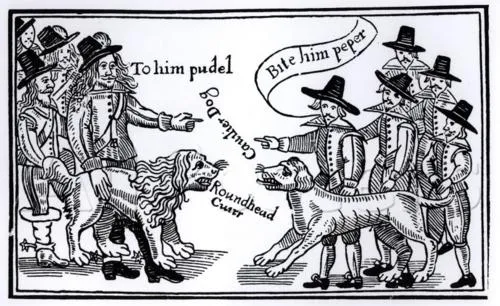
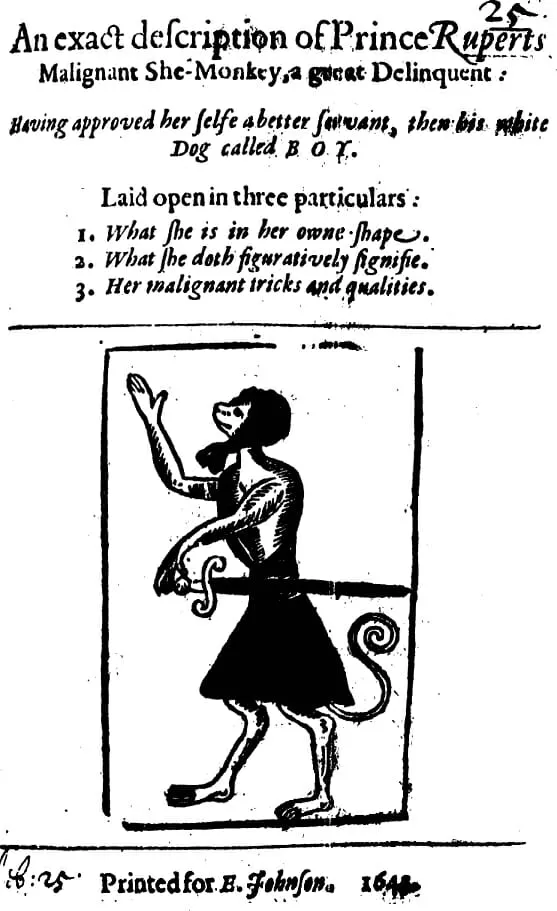
A poodle had become a propaganda battleground.
When Satire Meets Witch-Belief
And this is where it gets even more interesting, because the Cavalier joke did not stay a joke.
The pamphlets about Boy were circulating in a society that was already deeply anxious about witchcraft. England had witchcraft legislation on the books since 1542, and while prosecutions had been relatively rare under Charles I, the outbreak of civil war in 1642 shattered the normal structures of authority that had kept witch-hunting somewhat in check. Local courts, freed from central oversight, became more willing to act on accusations. And the language of diabolism — of familiars, of pacts with the Devil, of supernatural assistance — was suddenly everywhere in the political press.
The connection between the Boy legend and real witch-belief produced some extraordinary moments. In September 1643, on the eve of the First Battle of Newbury, Parliamentarian soldiers reportedly killed an old woman they suspected of being a Royalist witch. The pamphleteers who reported the incident framed it as a victory against the same kind of occult forces that Boy was said to represent. The implication was clear: the Cavaliers had witches in their camp, and the dog was proof.
Then, in 1645, the great East Anglian witch-hunt began — the largest in English history, driven by the infamous Matthew Hopkins. During the trials, at least one witch-suspect confessed to sending familiars to assist the King’s cause.
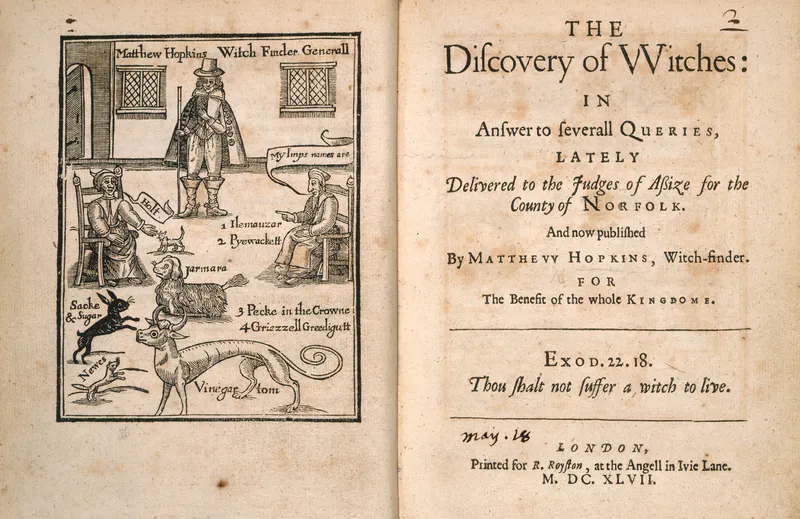
The line between satirical pamphlet and genuine confession had dissolved completely. What Cleveland and T.B. had started as mockery had fed into, and been fed by, a real and growing fear of witchcraft that would claim hundreds of lives.
The Death of Boy and the Afterlife of a Legend
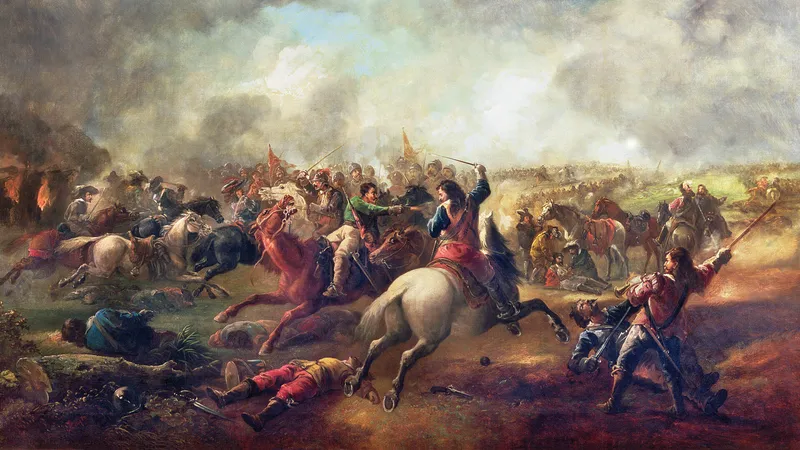
Boy himself did not survive to see any of this. He was killed at the Battle of Marston Moor on 2 July 1644, when Rupert’s forces were decisively defeated by the Parliamentarian and Scottish armies. The Parliamentarian press greeted the news with glee. Satirical elegies were published. Woodcuts showed the dog lying dead on the battlefield. Rupert’s ‘Mephostophiles’ was gone.
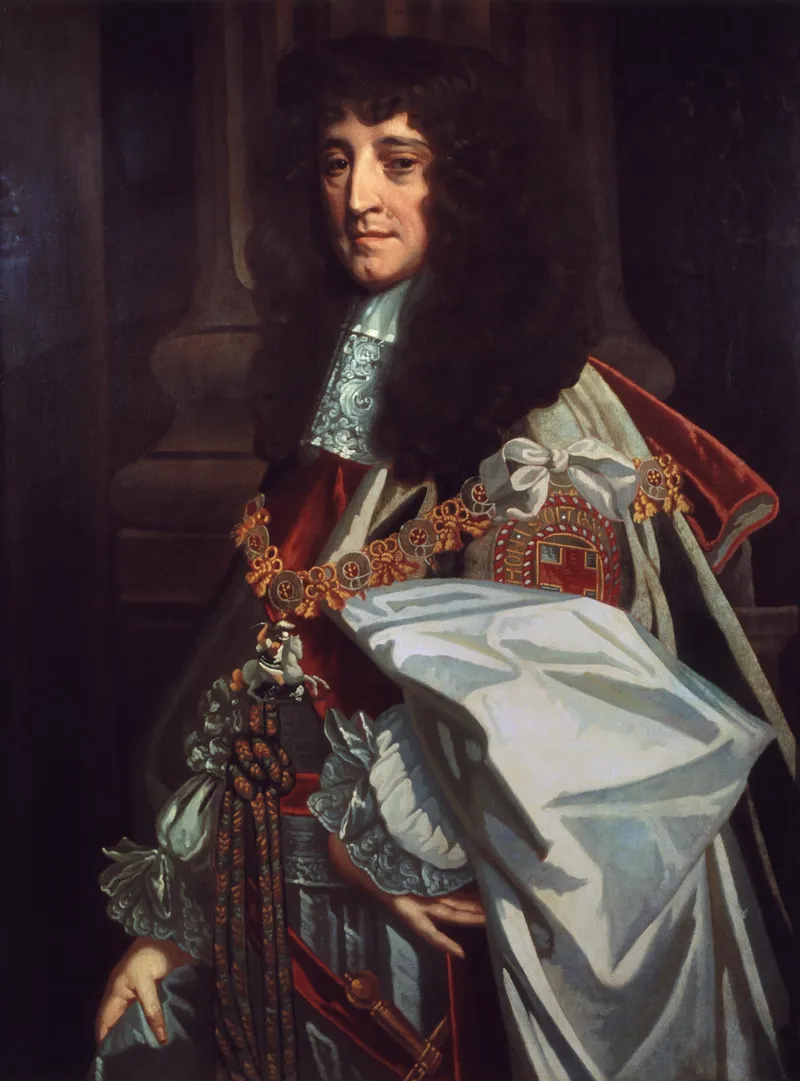
But the legend outlived the dog. Even after the war ended, even after the Restoration, even into the 1670s when Rupert was living quietly at Windsor, local people who saw him walking with his new dog — a large black one this time — said that they were both ‘wizards’. The story created in 1643 had taken root so deeply that it had become, for many people, simply a fact.
Propaganda and Its Consequences
Stoyle’s book is a masterclass in how propaganda works and how it can escape the control of the people who create it. The Cavalier writers who invented the myth of Prince Rupert’s devil-dog thought they were being clever. They thought they were exposing Parliamentarian superstition. Instead, they created a narrative that collided with genuine witch-belief, reinforced the very fears they were trying to mock, and ultimately helped to fuel the conviction that the Royalist cause was diabolically inspired.
The story of Boy is often treated as a quirky footnote to the
References:
Mark Stoyle, The Black Legend of Prince Rupert’s Dog: Witchcraft and Propaganda during the English Civil War (Exeter, 2011).
Primary Sources:
- Anon., A Most Certain, Strange and true Discovery of a Witch (London, 1643).
- Anon., An Exact Description of Prince Ruperts Malignant She-Monkey (London, 1643).
- Anon., The Bloody Prince, or a Declaration of the Most Cruell Practice of Prince Rupert (London, 1643).
- Anon., The Parliaments Unspotted-Bitch (London, 1643).
- Anon., A Dog’s Elegy, or Rupert’s Tears (London, 1644).
- John Cleveland, The Character of a London Diurnall: With Severall Select Poems (London, 1647).
James VI and I - ‘T.B.’, Observations upon Prince Ruperts White Dog, Called Boy (London, 1643).
- John Taylor (attrib.), A Dialogue, or Rather a Parley betweene Prince Ruperts Dogge … and Tobies Dog (London, 1643).
Secondary Sources:
- Michael Braddick, God’s Fury, England’s Fire: A New History of the English Civil Wars (London, 2008).
- Malcolm Gaskill, Witchfinders: A Seventeenth Century English Tragedy (London, 2005).
- Helen Pierce, Unseemly Pictures: Graphic Satire and Politics in Early Modern England (New Haven, 2008).
- Diane Purkiss, Literature, Gender and Politics during the English Civil War (Cambridge, 2005).
- James Sharpe, Instruments of Darkness: Witchcraft in England, 1550–1750 (London, 1996).
- Ian Roy, ‘Rupert, prince and count palatine of the Rhine and duke of Cumberland (1619–1682)’, Oxford Dictionary of National Biography (Oxford, 2004).
- Charles Spencer, Prince Rupert: The Last Cavalier (London, 2007).
- Keith Thomas, Religion and the Decline of Magic (London, 1971).