 Dr Julia Martins
In 79 AD, a Roman walked up to a stone counter in Pompeii, ordered a hot stew, and ate it standing up, because his apartment didn’t have a kitchen. Ancient Rome had fast food. Vending machines existed in 50 AD. Medieval people were cooking with almond milk in the 14th century. And a British admiral wrote “OMG” in a letter to
There’s a name for this feeling, when something real sounds fake because it feels too modern. It’s called the “Tiffany Problem.” The expression was created by the author Jo Walton, who explained it like this:
“There’s also what I call the Tiffany Problem — your readers are modern people and know what they know, which is fine except when what they know isn’t actually right. For instance, the name Tiffany sounds extremely modern to us. It feels jarring when we read it as a character name in a historical setting, where we’d be quite happy with names like Anna and Jane. But our instinct is wrong, because Tiffany is a form of Theophania, and it was fairly common in medieval England and France. It went out of fashion later, and it’s because we don’t have seventeenth to nineteenth century examples that it feels modern.”
— Jo Walton, “Putting the Historical in Historical Fantasy”, Tor/Forge Blog (2019)
So, if you are writing a historical novel, and you use a name like Tiffany — which sounds to me like an American girl in a 90s rom-com set in a sorority — your readers might think you didn’t do your research properly. As a historian who loves historical fiction, this is something I’m constantly thinking about. Here are my 10 favourite examples of the “Tiffany Problem”: things that are way older than you would assume.
Eyeglasses
Spectacles were invented in the late 13th century in Northern Italy. We know this because the Dominican friar
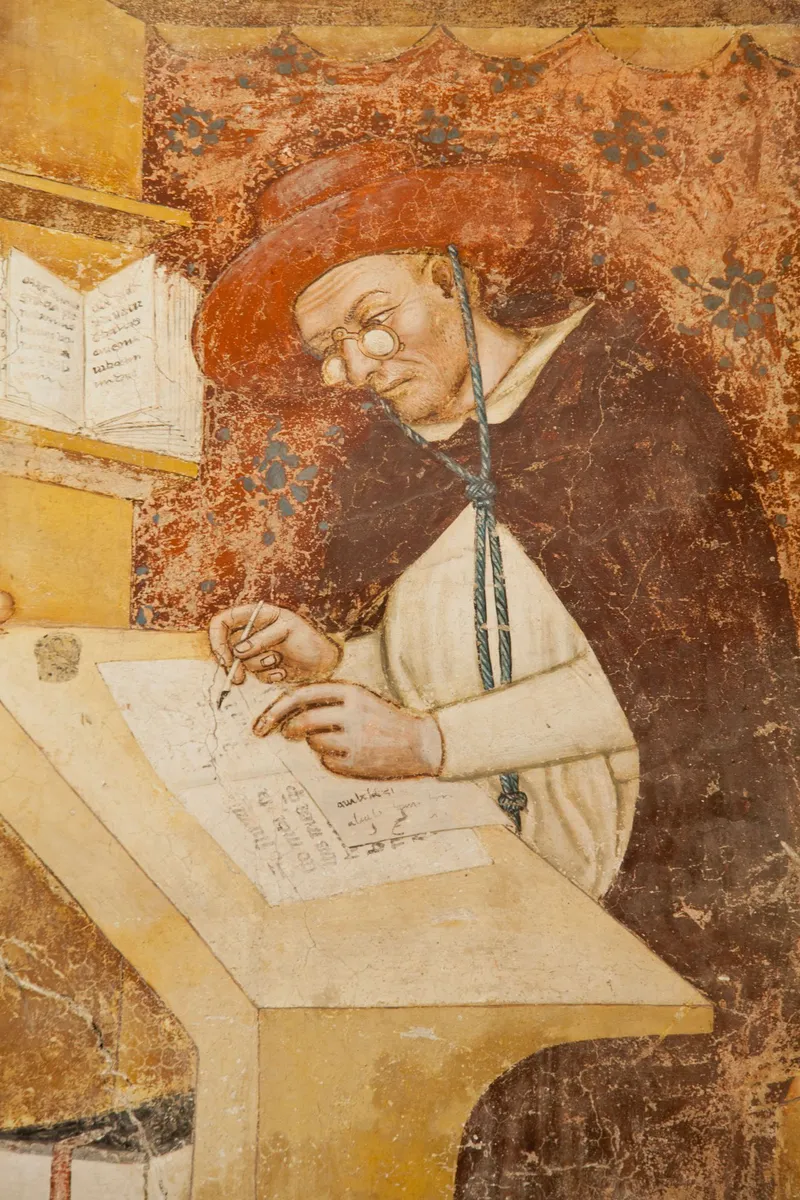
I learned about this with
Almond Milk
Almond milk is everywhere right now as a dairy-free trend, which makes it feel very contemporary. But it was a medieval kitchen staple, documented in cookbooks from at least the 13th century. Catholic fasting laws prohibited animal products for a large portion of the year, especially during Lent, so almond milk was a critical dairy substitute.
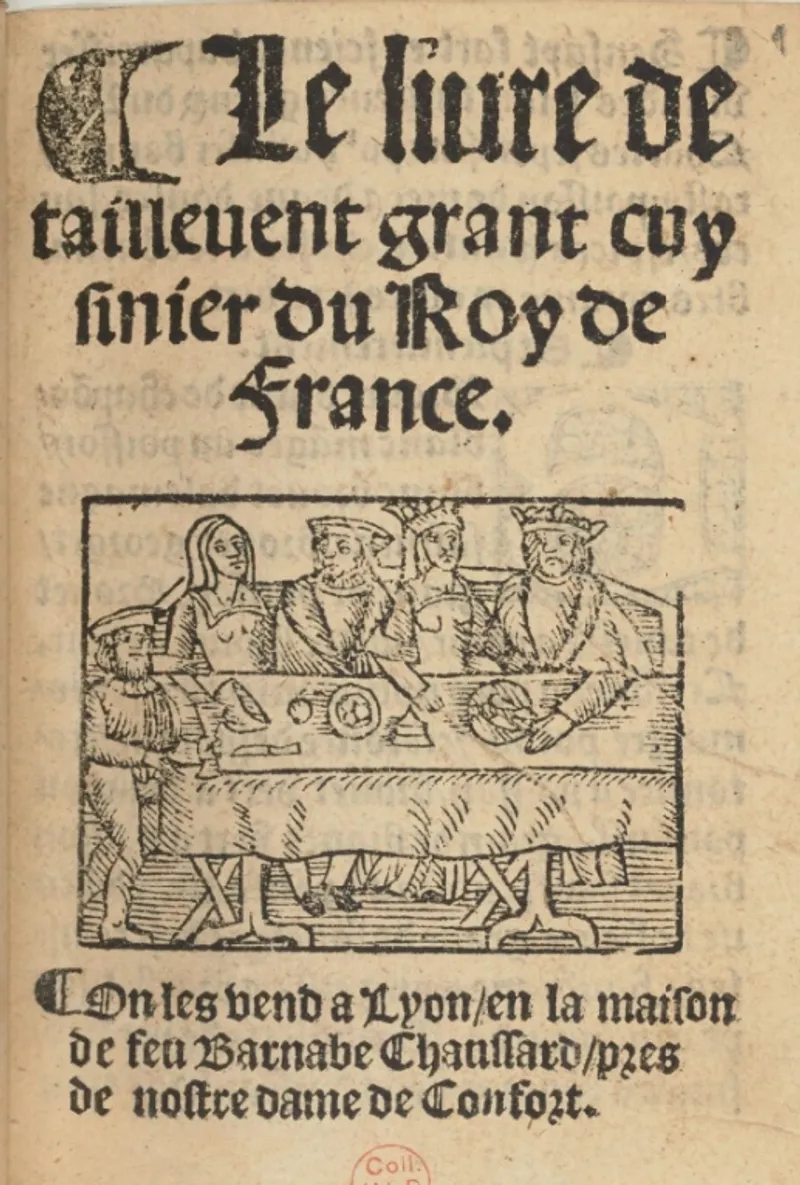
The book Le Viandier de Taillevent (c. 1300) references it, and around 17% of recipes in the 15th-century Liber Cure Cocorum use it as a base. Ken Albala’s Food in Early Modern Europe (2004) confirms that almond milk was standard across Western Europe and the medieval Arab culinary world.
Tofu
Same as the almond milk, tofu may feel modern because it’s trendy. But tofu has been around for a long time (kombucha too, by the way). The oldest confirmed written reference to tofu dates to 965 CE in a Chinese text called Anecdotes, Simple and Exotic by Tao Ku, where it’s described being sold in a daily market under the nickname “vice mayor’s mutton” — so, already a street food with a slang name, which implies it had been around long enough to acquire one.
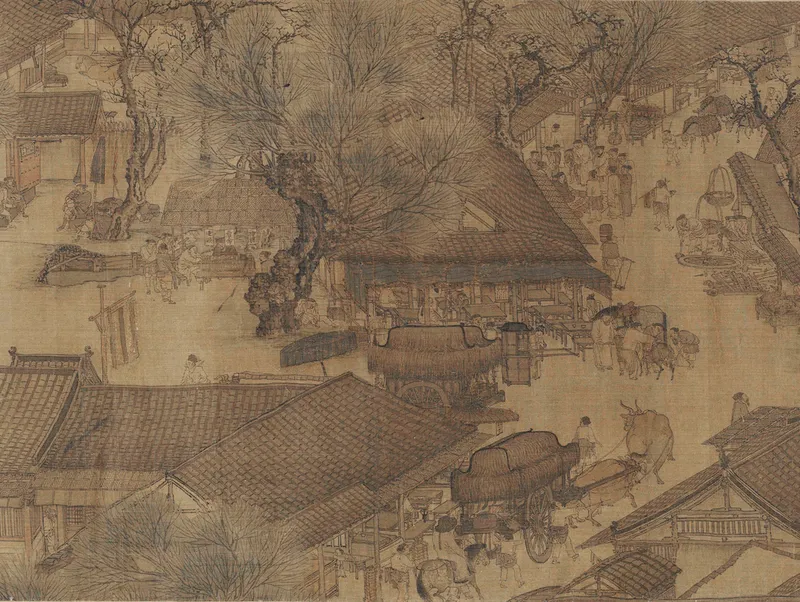
There is another, legendary story, in which Prince Liu An, from the Han dynasty, created it. From China, tofu spread across East and Southeast Asia through Buddhist monastic networks, as it was ideal for vegetarian diets. The first European to write about it was British Captain John Saris, who observed it being eaten in Japan in 1613 and clearly had no idea what he was looking at, as he called it “cheese” — historians have interpreted it as tofu. I learnt about the history of tofu in China, where they were very adamant about the fact that they invented tofu, and not the Japanese. And fair enough.
Platform Shoes
I grew up in the 90s, listening to the Spice Girls, so these shoes look very modern to me. But Renaissance women wore chopines, platform overshoes that could reach 20–30 inches in height in Venice, meaning they needed servants’ help to walk in them. These shoes originated around the late 15th century, possibly from Turkish bath shoes, and spread across Europe. They were particularly popular among courtesans in Northern Italy.
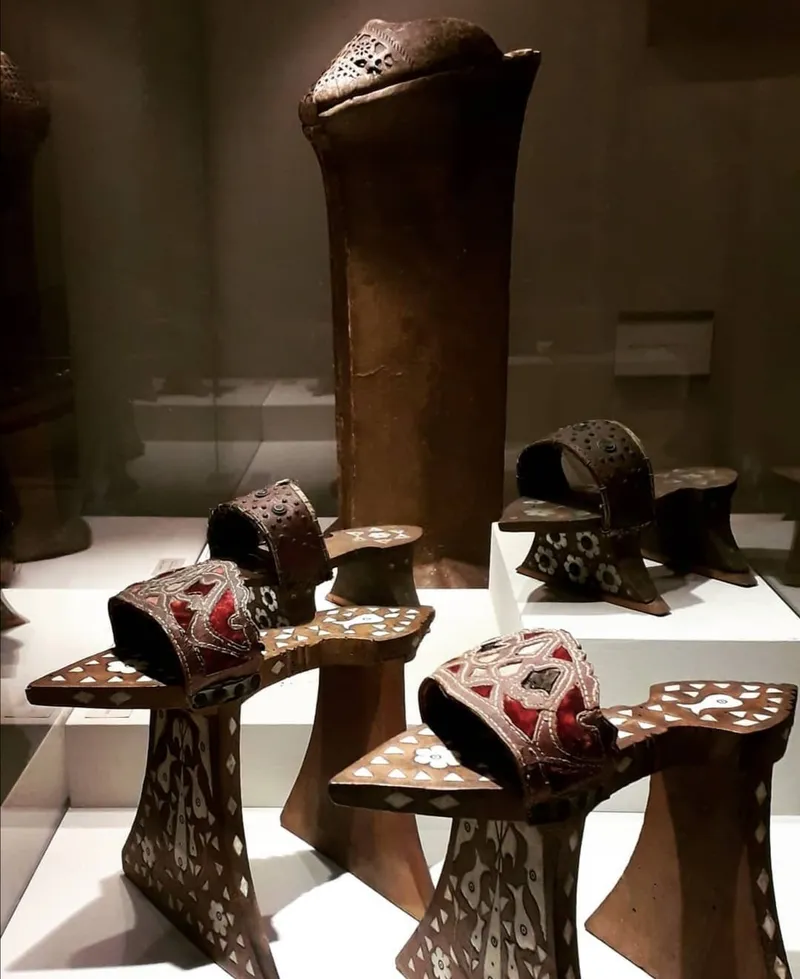
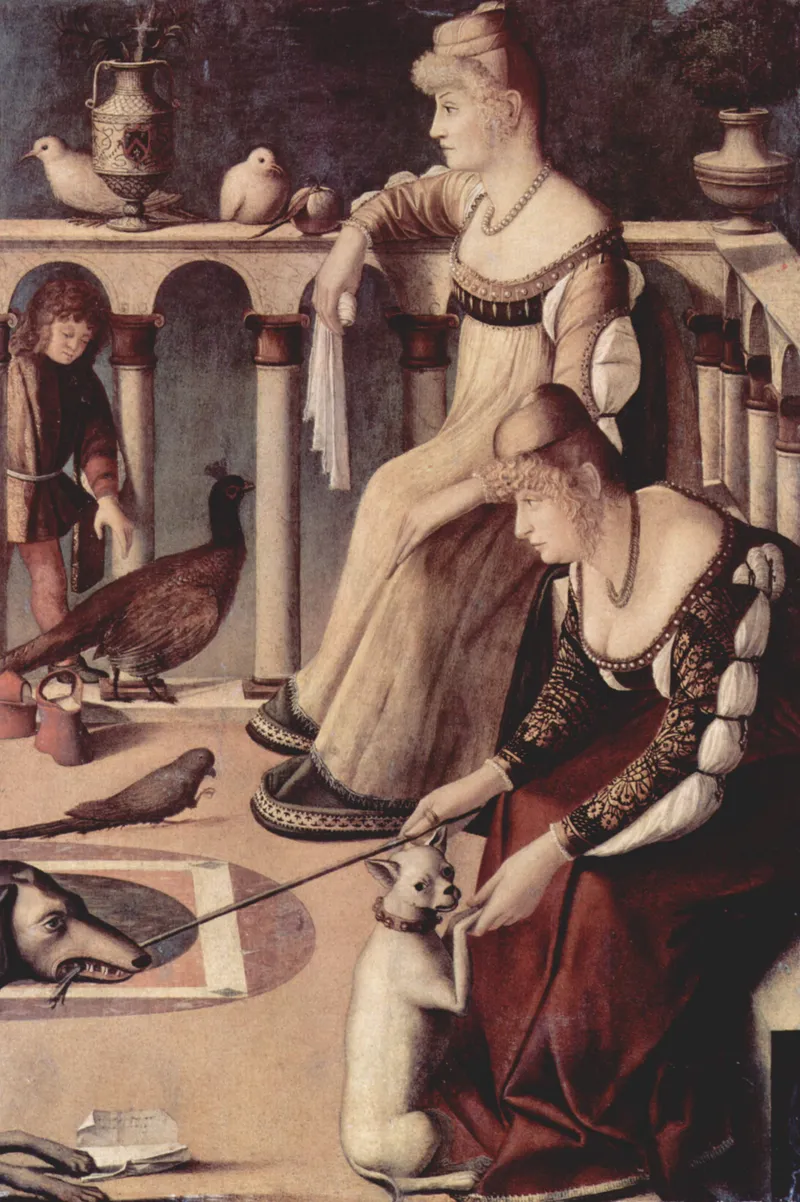
You can find them in many museums today, and I saw a lovely pair in Venice last year. Usually, the taller the shoe, the higher the social status. But if you put a Venetian sex worker in platforms in a novel set in the Renaissance, readers may find it weird. It’s historically accurate, though.
Toothbrushing
People in the past did clean their teeth, sometimes with chewing sticks, like frayed twigs. They also used rough cloths and herbal mouth rinses; abrasive powders and toothpicks were very fashionable for a while in the Renaissance. Medieval medical texts show genuine concern about tooth appearance and bad breath. Of course, medieval diets were low in refined sugar, which only became widely available in Europe later, so tooth decay was less common then than in the early modern period.
Medieval people cared about their hygiene. The myth of the dirty, toothless medieval peasant has got to go, really. So, if you saw a period film and medieval people had nice teeth, that isn’t necessarily inaccurate. If they have veneers, on the other hand… Enough said.
Hot Chocolate
Hot chocolate may feel like a cosy modern invention: people associate it with the Alps, with the Victorian era, something from a Christmas market. But cacao drinks have been consumed in Mesoamerica for over 3,000 years. Chemical analysis of pottery residues confirms cacao beverages from at least 1100 BCE.
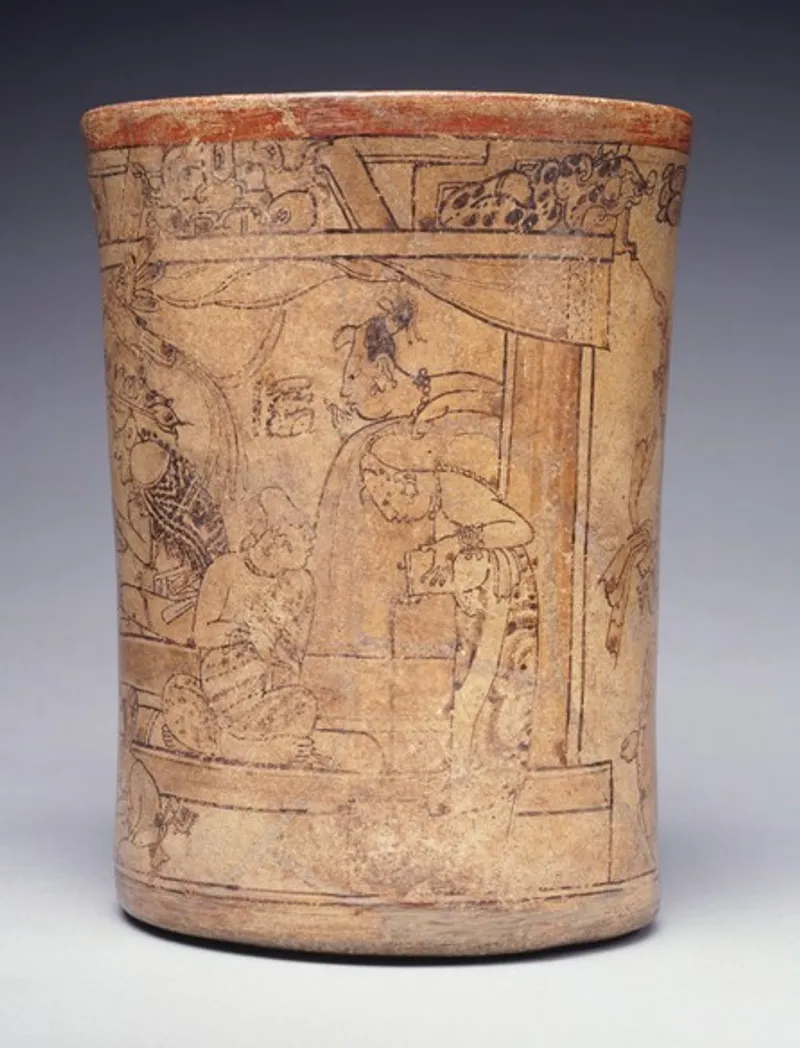
The Aztec drink xocolatl was bitter and spiced with chilli, made without milk — very different from what we drink now. The “hot”, milky, sweet version is the European adaptation from the 16th century onward.
Fast Food
Fast food feels like a 20th-century American invention, but ancient Pompeii had dozens of thermopolia: open-fronted stone counters with large earthenware jars set into them, selling hot stews, bread, salty fish, and spiced wine to people who had no kitchen at home. Most urban Romans lived in apartment blocks (insulae), many of which had no cooking facilities, so this was a daily necessity.
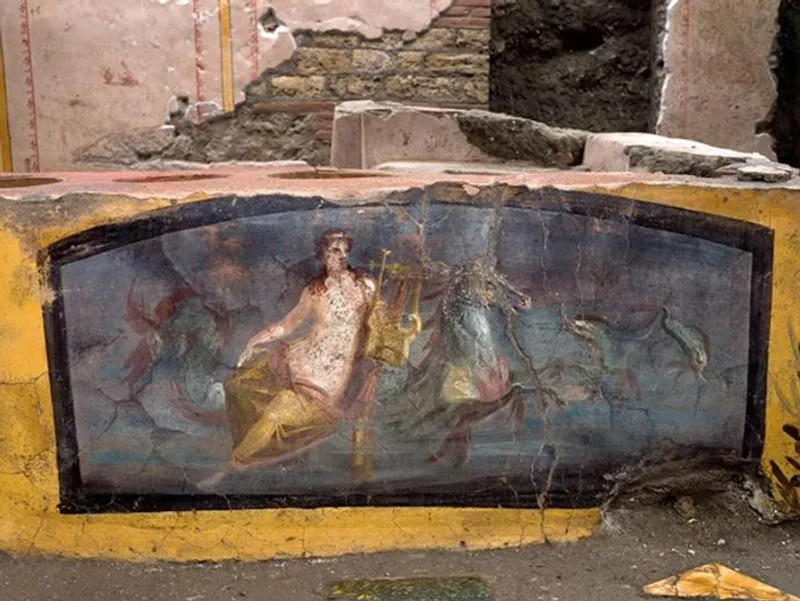
A 2020–21 excavation in Pompeii’s Regio V district found intact food residues and vivid counter frescoes, giving archaeologists a direct snapshot of what Romans were eating in 79 AD. It was “fast food.”
OMG
I don’t need to tell you how modern OMG sounds. But it was first used by an admiral during the First World War in a letter to Winston Churchill in 1917. Lord Fisher (whose title was “First Sea Lord” — he was one of the most famous naval figures of the time) wrote to Churchill:
“I hear that a new order of Knighthood is on the tapis—O.M.G. (Oh! My God!)—Shower it on the Admiralty!!”
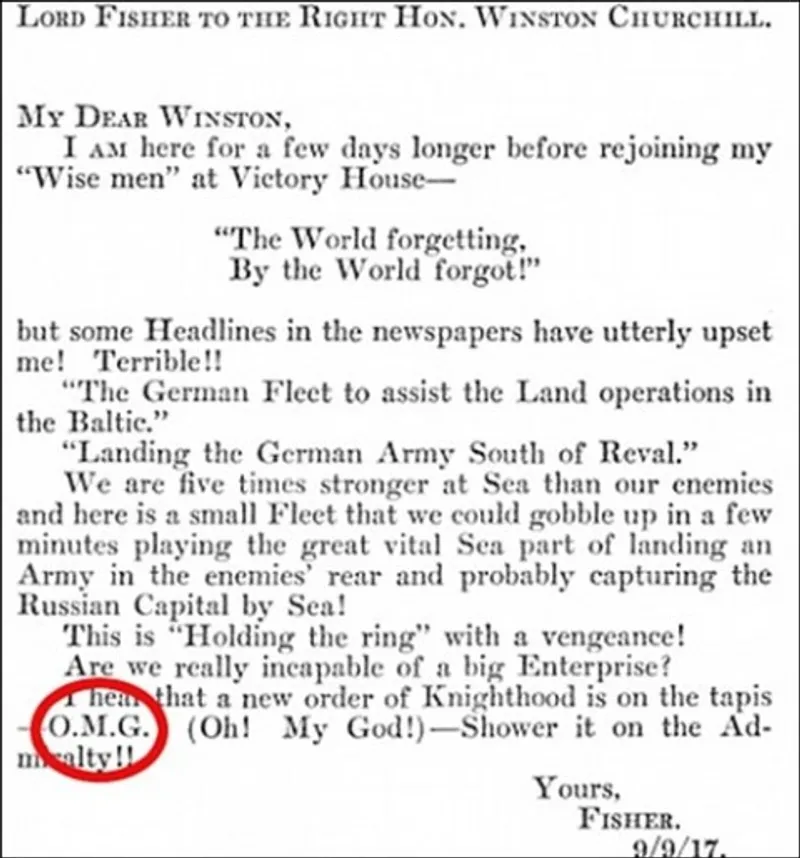
So, according to the Oxford English Dictionary, he was the first person to use OMG. And I learnt this reading a BBC interview with his great-great granddaughter, who thinks he would have loved emojis. I think so too.
Vending Machines
This is one of my favourites.
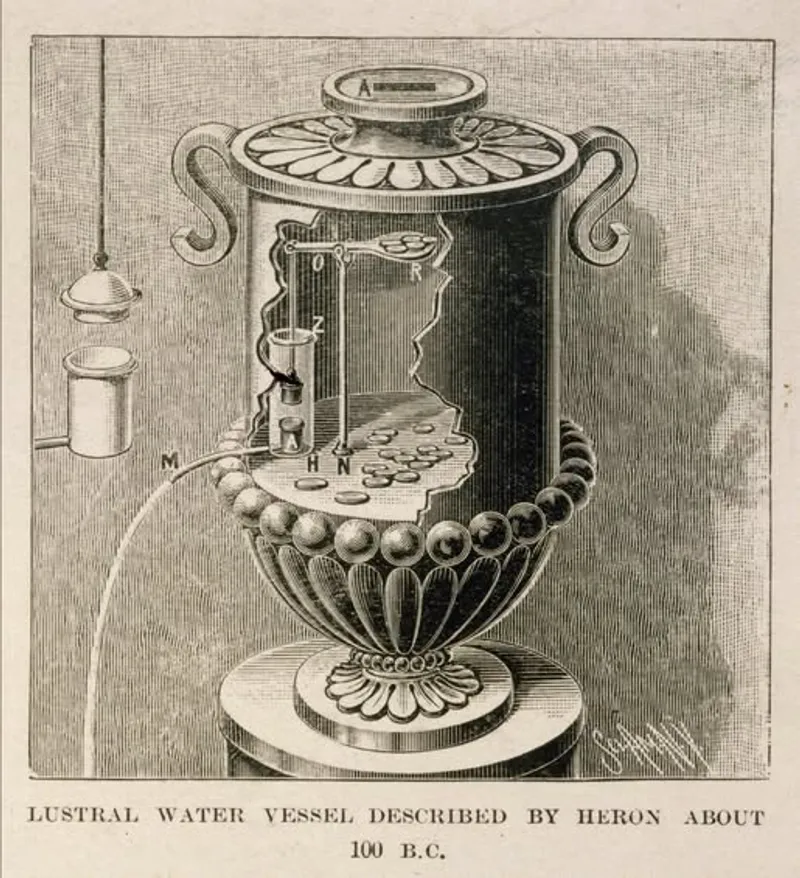
He also designed statues that poured wine, if I’m not mistaken. This wasn’t a widespread thing, of course, but it is a case of something that feels very modern having been a part of the ancient world.
”Robots”
We tend to associate robots with the Industrial Revolution at the earliest (think steampunk). But, still thinking of Hero of Alexandria, he built two families of what he called automata, meaning “acting of one’s own will” — that’s where we get “automatic” from. The University of Glasgow has a research project reconstructing Hero’s designs from his surviving text Automata, and the University of Queensland built a working reconstruction of his Dionysiac shrine for a museum exhibition.
But Hero wasn’t even first:
So next time you think something feels “too modern” — whether in a film, TV series, videogame, or novel — maybe check before you complain. History is weirder than fiction.
References:
Aulus Gellius, Attic Nights (Noctes Atticae), X.12, c. 180 AD.
Ken Albala, Food in Early Modern Europe (Westport, CT: 2004).
Carl A. Huffman, Archytas of Tarentum: Pythagorean, Philosopher and Mathematician King (Cambridge: 2005).
Ernest M. Satow (ed.), The Voyage of Captain John Saris to Japan, 1613 (London, 1900).
Hero of Alexandria, Automata; Critical edition: W. Schmidt (ed.), Heronis Alexandrini Opera, Vol. 1 (Leipzig: Teubner, 1899).
Hero of Alexandria, Pneumatica, trans. Bennet Woodcroft, The Pneumatics of Hero of Alexandria (London, 1851).
John S. Henderson, Rosemary A. Joyce, et al., “Chemical and Archaeological Evidence for the Earliest Cacao Beverages”, Proceedings of the National Academy of Sciences 104, no. 48 (2007): 18937–18940.
John Arbuthnot Fisher (Lord Fisher), Letter to Winston Churchill, 9 September 1917. Cited in: Oxford English Dictionary, entry “OMG”.
Jordan of Pisa (Giordano da Pisa), Sermon, Santa Maria Novella, Florence, 1306.
Le Viandier de Taillevent, c. 1300. Earliest surviving manuscript, Bibliothèque nationale de France.
Liber Cure Cocorum, 15th century. Sloane MS 1986, British Library.
Pompeii Archaeological Park, “Thermopolium of Regio V.” Excavation reports, 2019–2021.
Trevor Anderson, “Dental Treatment in Medieval England”, British Dental Journal 197 (2004): 419–425.
Tao Ku, Qing Yi Lu, “Anecdotes, Simple and Exotic”, 965 CE.
Terry G. Powis et al., “Cacao Use and the San Lorenzo Olmec”, Proceedings of the National Academy of Sciences 108, no. 21 (2011).
Jess Venner, The Lost Voices of Pompeii: The Final Day in Seven Lives (2026).
Jo Walton, “Putting the Historical in Historical Fantasy”, Tor.com, 2019.
William Shurtleff and Akiko Aoyagi, History of Tofu and Tofu Products (965 CE to 1984) (Lafayette, CA: 1984).