 Dr Julia Martins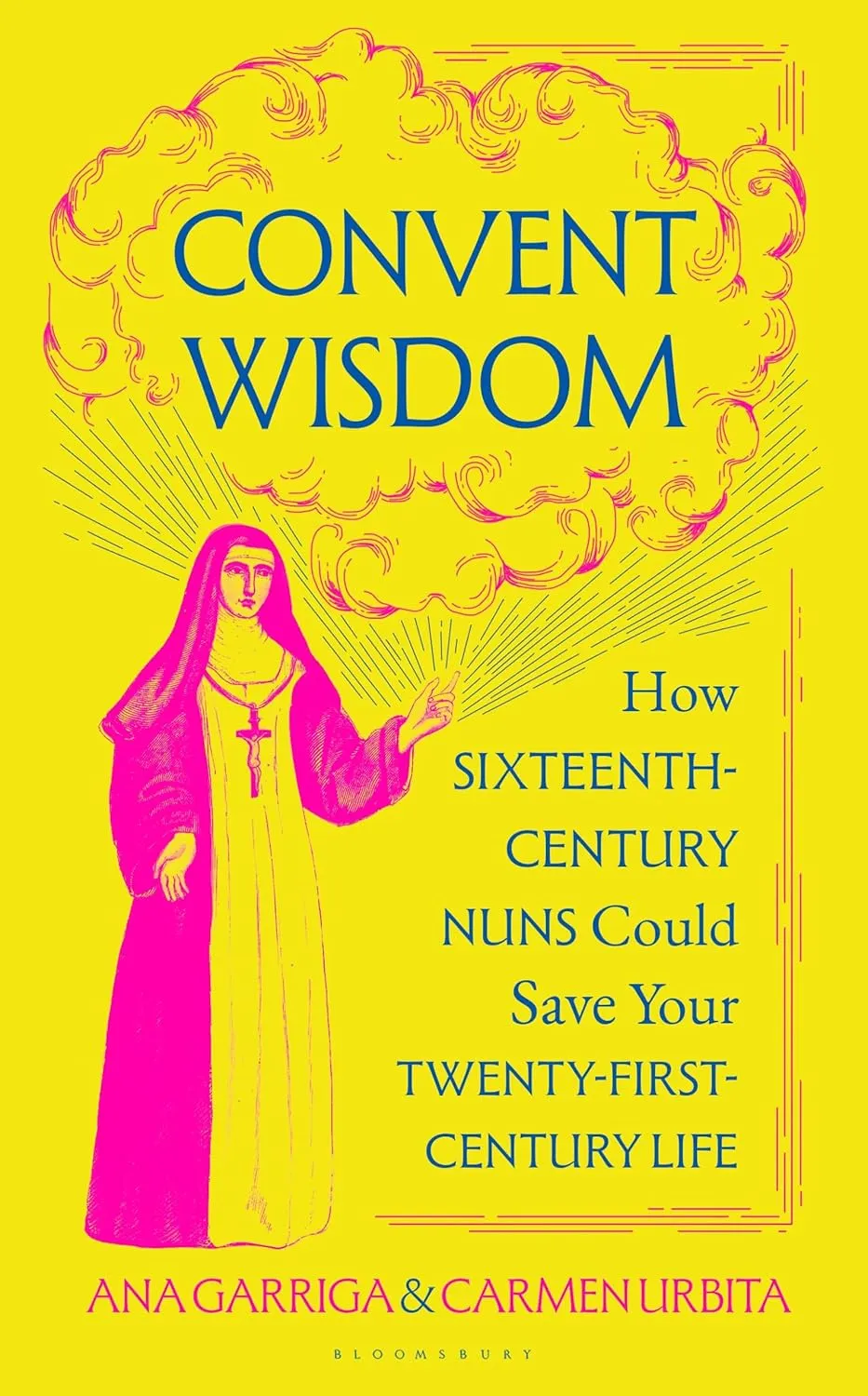
I have been fascinated with nuns since Sister Dulce, a teacher in the Catholic school I attended in Brazil, told me she loved gardening. I had never before realised that nuns - like everyone - could have a rich interior life. That they were more than the boring grey habit that they wore.
Later, I came across fascinating nuns while studying history: Sor Juana Ines de la Cruz, the Mexican nun whose poetry will make you swoon and whose theological arguments were hard to beat - not to mention her passionate pleas for women to have the right to an education. St Teresa d’Avila, who was said to levitate, and whose ecstasy was forever immortalised by the sculptor Gianlorenzo Bernini. Benedetta Carlini, the Italian mystic who was investigated by the Inquisition, and who reportedly engaged in “unnatural” nocturnal activities with another sister. The list goes on.
These nuns were exceptional; but, paradoxically, there were many of them in the early modern period. Great thinkers, miracle-workers, healers, talented writers, preachers, reformers, mystics: they were lauded or, at times, persecuted. I have been reading their works, plus historians’ research on nuns for ages, as a kind of sidequest. (One of my closest friends wrote his PhD on early modern nuns in Lisbon convents, and each time I see him I learn something new about these women.)
When another friend recommended “Convent Wisdom” to me, I ran straight to my local library which, to my delight, had a copy. (I’m not religious, but I think of libraries as a kind of secular church: they always have the answer. If they don’t, they’ll guide you in the right direction to find it.)
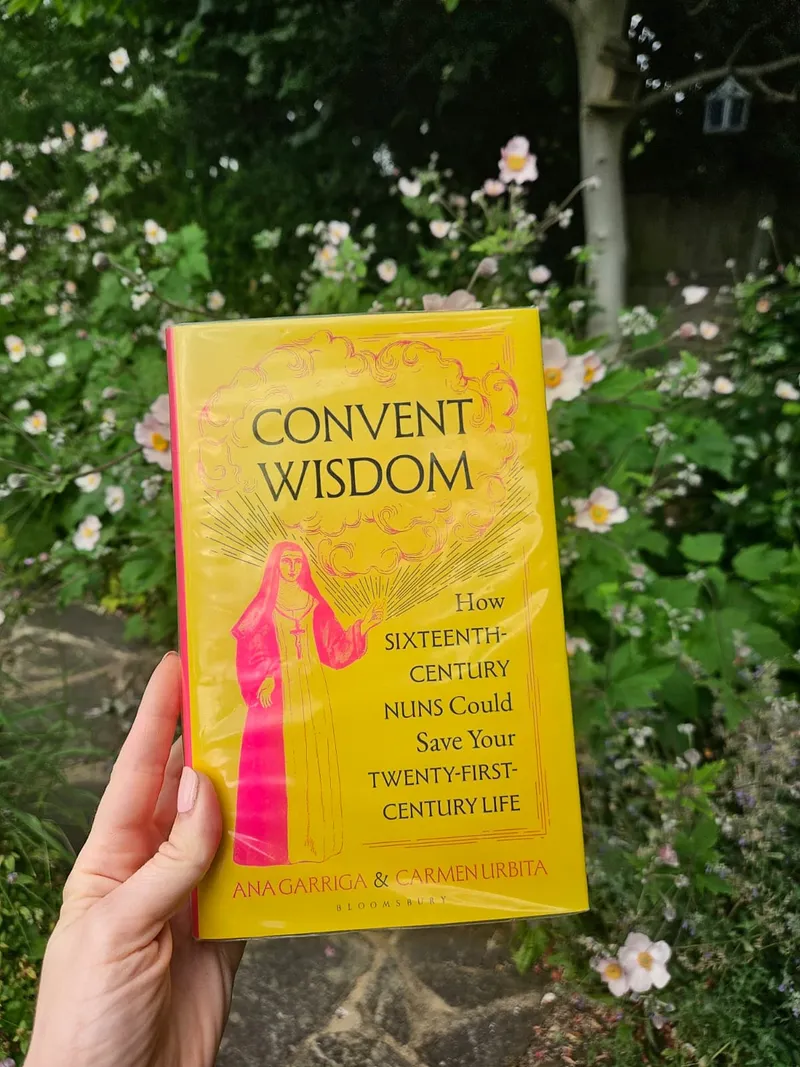
This is a book written by two academics, Ana Garriga and Carmen Urbita, who became friends in large part through their mutual love of historical nuns. They launched a podcast, Las hijas de Felipe, which explores their shared interest in these remarkable women, but also how their lives can help us deal with ours. They introduce the podcast as “Everything that is happening to you has happened to someone in the 16th or the 17th century”, by which they mean, mostly, nuns. The book follows in the spirit of the podcast, with the authors writing: “Anything you are going through right now has probably already happened to a nun living several hundred years ago.” Garriga and Urbita combine anecdotes about nuns who survived only on holy wafers and water with their own life struggles, the development of their friendship, queer awakenings, and plenty of pop-culture references.
It is hard to say why we are so fascinated with nuns. But from Audrey Hepburn to Madonna, from Chappel Roan to TikTok videos, nuns seem to be everywhere. (Recently, Brazilian nuns went viral celebrating a goal the Brazilian team scored during the World Cup.) There is the mystery element: how little most of us know about happens behind the cloistered walls. There is the allure of choosing a different path, a community of women instead of marriage and motherhood. There is the bafflement at such a profession of faith in a (mostly) secular world. There is the temptation of an idealised life lived amid a community of women.
The authors touch on all of this in this book, even if it is undoubtedly a light-hearted read, full of funny and witty comparisons to contemporary Internet trends and modern dating life. The nuggets of life lessons from many incredible nuns and the self-help-style advice are woven together in a surprisingly engaging way by the authors. (Or perhaps unsurprisingly, if you’ve listened to the podcast!)
The authors cover an impressive number of nuns in this book. They even manage to include one of my favourites, Hildegard of Bingen, the medieval mystic, composer, and medical writer who was also great with money. Garriga and Urbita remind us that these incredible women were not isolated geniuses operating on their own: they were deeply integrated in their communities, not just the convent in which they lived, but also the wider world.
From love to friendship, money to fame, these early modern nuns are perhaps surprisingly relatable in their struggles, practicality, and flaws. But maybe that should not surprise us. After all, studying history is an exercise in finding the humanity in others who might have lived centuries before us. It is also a reminder of how crucial it is to feel connected to those around us. As the authors write:
“The itch of coarse fabrics and the chafe of hemp sandals would periodically remind Teresa, María, and countless other sore nuns of the vanities they had left behind. Yet the companionship, comfort, and conversations offered by their sisters more than compensated for the trials of life behind the lattice windows.”
This is a joyful book; a book that celebrates women, female friendship, wisdom, and love. It is also a lesson in how to bring history to life by humanising those we study. Garriga and Urbita are experts at self-deprecating humour and pop-culture comparisons, but they treat their subjects with the respect they deserve. If you have never wondered about the rich inner-world of nuns, their communal lifestyle, and their relationships to each other and God, there is no better place to start. Just like Sister Dulce, my Brazilian teacher who made chamomile tea with the flowers she grew herself, there is so much more to nuns than meets the eye.